
Ask ten travellers how they would cross Iran and you get ten itineraries, yet most of them stop at the same brown plaques. I stopped reading the World Heritage list as an honour roll and started reading it as routing data, and the trip got shorter instead of longer.
The list is a map, not a checklist
The Iranian listings cluster along a single corridor: the capital, the desert edge of the centre, then Fars in the south. Nothing about that shape is accidental. Capitals build monuments, merchants build bazaars, and water engineers build qanats, so the places that survived long enough to be inscribed tend to sit within a day's drive of each other.
That gives you a working rule. If a site sits more than five hours off your line, the plaque is rarely worth the detour; the exceptions are the ones with a landscape attached, not the ones with a better paragraph in the guidebook.
What the northern leg actually delivers
Tehran is the awkward start of any route, but the Golestan complex turns two spare hours into something worth having. The Moghadam house and the nature bridges fill an afternoon if the museums are closed, and both are inside the city, so nothing is lost to driving.
Southwest of the capital the list does better work. Fin Garden at Kashan and the village of Abyaneh sit on the same road to Isfahan, which means a morning among terraces and water channels costs you no extra distance at all.
The centre is where the designation pays
Isfahan is the segment where the list stops being a label and starts shaping the day. Naqsh-e Jahan Square and the Friday Mosque are minutes apart, and the Armenian quarter with its cathedral sits on the far side of the same city, so a full walking loop is possible without a transfer.
| Stop | What it adds | Time needed |
|---|---|---|
| Tehran | Palace complex and one museum | Half a day |
| Kashan and Abyaneh | Garden, village, road scenery | Two hours on the way |
| Isfahan | Square, mosque, bazaar, bridges | A full day |
| Yazd | Old city, qanat, fire temple | A day and a morning |
| Shiraz and Fars | Tombs, relief carvings, ruins | Two days |
Where the plaque stops helping
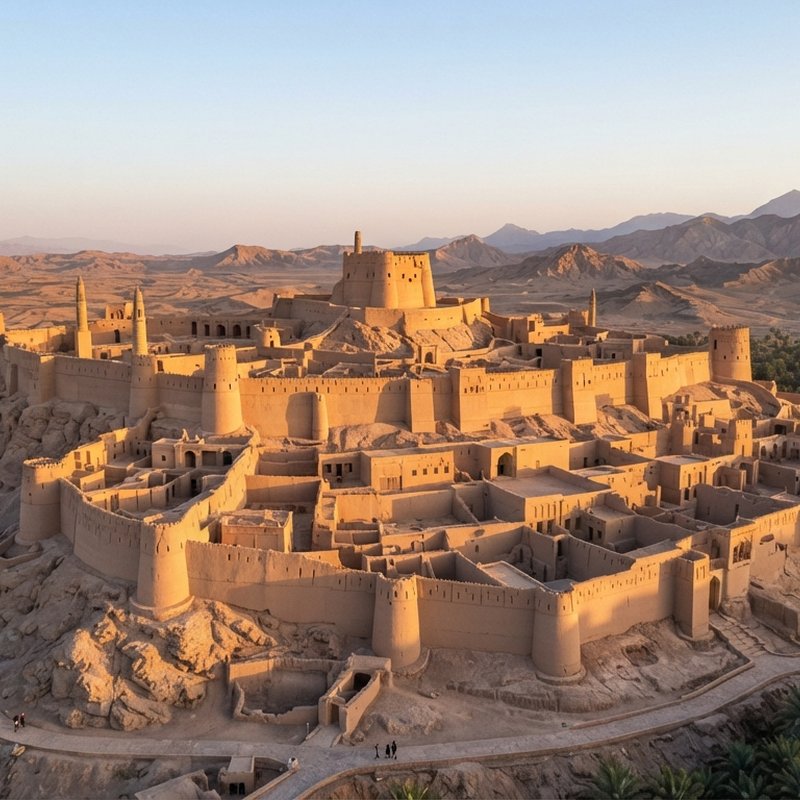
Yazd rewards you for the wrong reason. The inscribed part of the old city is a maze you walk through, but the wind towers and the qanat channels only make sense once you have seen how dry the surrounding plateau is, and that view is outside the official boundary. Plan the walking loop for early morning, then spend the heat of the afternoon inside the bazaar and the fire temple, where the reading is the same whether or not a plaque is on the wall.
The list is also broader than buildings. The zourkhaneh, the traditional gymnasium where a ritual sport is still practised, sits on the intangible heritage side of the paperwork, which tells you something useful: the best hour in Yazd may be the one you spend watching a session rather than photographing a portal.
The same is true in Fars. Persepolis sits sixty kilometres from Shiraz and Naqsh-e Rostam is seven kilometres beyond it, so the two are easy to pair, yet the rock reliefs at Tang-e Chogan and the ruins at Bishapur are what explain why an empire needed a ceremonial capital at all.
The rule I use now
I book the corridor first and let the plaques fill the gaps: one night for the centre, two for Fars, and anything beyond that has to justify itself with a landscape rather than a label. When a listed site falls more than a few hours off the line, I skip it and keep the day for a bazaar, a bus station, or an unplanned lunch.