
The taxi from the airport had no air conditioning and the driver apologised for it before we had left the kerb, which set the tone for the whole week. Qeshm sits in the Strait of Hormuz, about twenty-two kilometres from the mainland port of Bandar Abbas, and the first thing you notice is not the sea but the humidity - it arrives at the car door and stays with you for four days.
A wall built by someone else
The Portuguese put up the fort in 1507 under Afonso de Albuquerque, and the ruins still hold the high ground above the town. Eleven thousand square metres of it, the largest defensive work on the island, with a geopark museum and a bazaar growing inside the walls as if the garrison had simply been replaced by shopkeepers.
Our guide, who had grown up in the shadow of the rampart, spent ten minutes explaining how the salt traders used the same ramp the soldiers had used, only in the other direction. He was not romantic about the ruins. The best view, he said, was from the road below, because that is where you can see the whole wall in one frame.
Six kilometres underground
The salt cavern is ninety kilometres from the town, and the road out to it crosses a landscape that looks borrowed from somewhere drier. The cave runs six kilometres under the ground with a vault that rises to two hundred and thirty-seven metres at its highest point, which is roughly the height of a seventy-storey building stacked inside a hill.
Inside, the walls are banded white and grey, and the ceiling drips steadily enough that everyone stops talking. Our group was quiet for perhaps three minutes, which is a long time for eight strangers. On the way back we stopped at the Kherbes grotto near a village whose name matches the site, a Sassanian period ruin on a rocky outcrop that somebody has argued was a temple to Anahita and others have called a tower of silence. Nobody has settled it, and the locals seem to prefer it that way.
Boats still built by hand
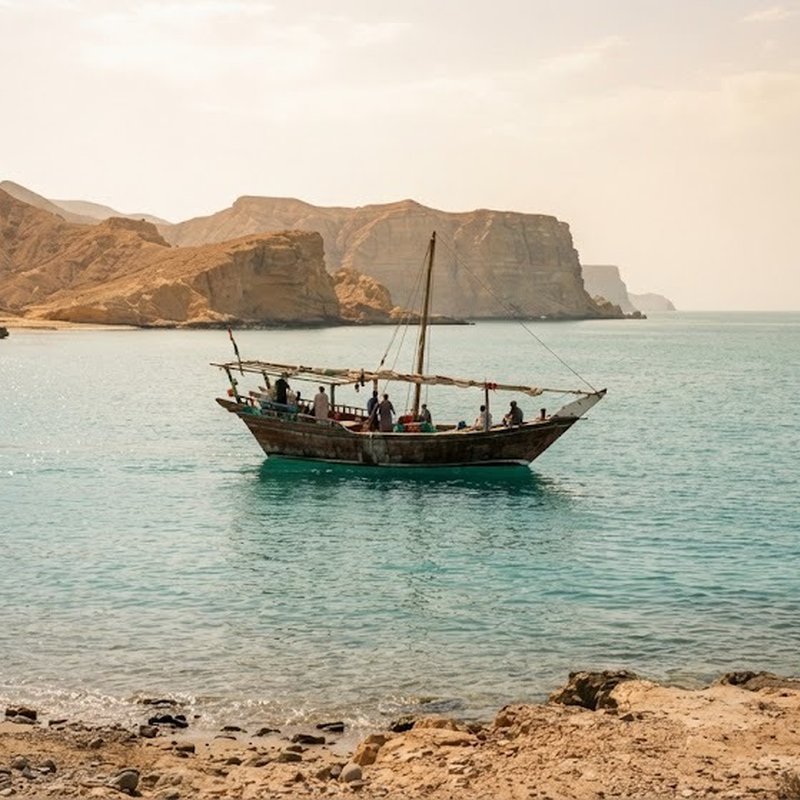
The Hera forests on the far side of the island are where the migrating birds come through - pelicans and flamingos in the right season - and the track to them passes the dockyards where dhows are still put together by hand. Watching a hull come together out of planks and rivets, with no plan in sight and no crane anywhere, is the moment the island stopped being a stopover.
A carpenter there told me they launch one boat every few months and that the wood comes from further up the Gulf, and that nobody younger than forty wants to learn the job properly. He said it without drama, the way people describe weather. I bought nothing and stayed an hour, which seemed the fair exchange.
Two hours that set up the week
Before the island there is a morning in Tehran, and it is worth taking seriously. The carpet museum holds pieces from every province in the country, arranged so that you can watch a pattern change as the weavers moved north and south, and the glass museum in the old mansion next door displays Achaemenid vessels and later Islamic glass in rooms that were never designed for crowds.
After lunch the archaeological museum does the heavy lifting: pottery and sculpture from the prehistoric periods through the empires, with enough labels in English to make an hour disappear. I came out of it with a working idea of what the Gulf coast had been connected to for three thousand years, which is exactly the frame you want before you fly down to the water.
Back north, slowly
The flight to Tehran undoes the geography in forty minutes, and the second half of the route runs through Kashan and its gardens, the village of Abyaneh with its terraced houses, and on to Isfahan for the bridges. After the salt and the humidity, Isfahan feels almost cool, and the evening light on the thirty-three arch bridge is the first thing in a week that looks exactly like the postcards.
The trip ends in Shiraz, at the shrine of Shah Cheragh and then the tombs of the poets, with the bazaar closing around us because it does not open on Fridays. I had expected the island to be the interlude and the mainland to be the point. It turned out the other way round: I remember a wall, a cave, and a man building a boat with no hurry at all.