
The bread queue outside the gate had already doubled by six in the morning, and the taxi drivers who wait for tourists were still asleep in their cars. Shiraz sits eight hundred and ninety-five kilometres south of Tehran in a province that gave its name to the language, and the city does its best work in the two hours before the day heats up.
The gate, then the garden
The Quran Gate on the edge of town was raised as a blessing for travellers leaving the city, and it is the last piece of architecture you see before the road opens into orchards. Beyond it the Eram garden is a long axis of water and cypress with a nineteenth century pavilion at the far end, and before nine the only sound in it is the pump that keeps the reflecting pool running.
I walked the whole length twice. The garden is where the city explains itself: roses, orange trees and vines in one rectangle, kept alive by a channel that has been doing the same job for centuries. An attendant told me the gardeners start at four and finish by seven, which is the same logic as the bread queue.
Tombs, traffic, and a pink mosque
The tombs of Hafez and Saadi draw the school groups and the coaches, and by mid-morning the paths around them are too crowded to read anything. Go at seven and you get the pavilions almost alone, with the caretaker sweeping the tiles under the domes.
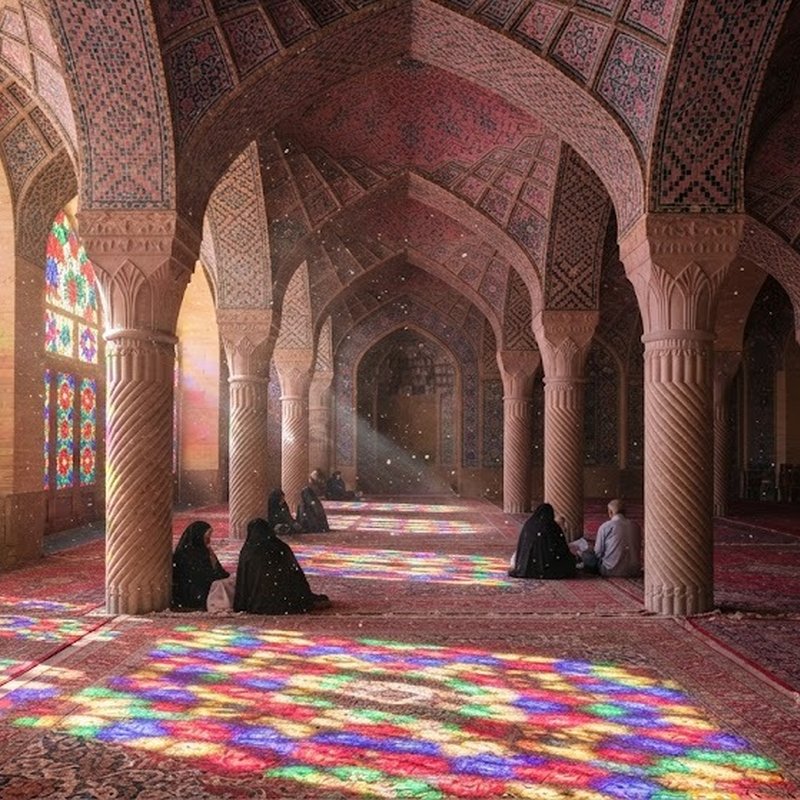
West of there, the Nasir ol-Mulk mosque is the one interior that needs the light rather than the crowd: coloured glass throws patterns across the carpet for about an hour after sunrise, and the photographers who arrive at ten are photographing a much duller room. The old Jameh mosque, with its fourteenth century brickwork set against turquoise, does the same trick in a quieter key, and the citadel of Karim Khan in the centre of town anchors the rest of the day whenever the museums close.
Sixty kilometres east
The road out to Persepolis climbs away from the gardens and into open plain, and the ceremonial capital comes into view as a platform of columns rather than a building. Darius received delegations here at the new year; the whole complex took a century to build. Seven kilometres beyond, Naqsh-e Rostam cuts the royal tombs into the cliff face, and the drive back before dusk is the part of the day I would keep.
What stays with me is not the reliefs but the light on the drive home: orange groves going dark one irrigation channel at a time, and a driver who would not turn the radio on until we were inside the city limits.