
Ask for the best month to travel in Iran and you get the same answer twice a year, which should be the first sign that it is an average rather than a recommendation. The country runs at least four different climates at once, and the right window depends on which of them you are going to cross.
The two windows everybody quotes
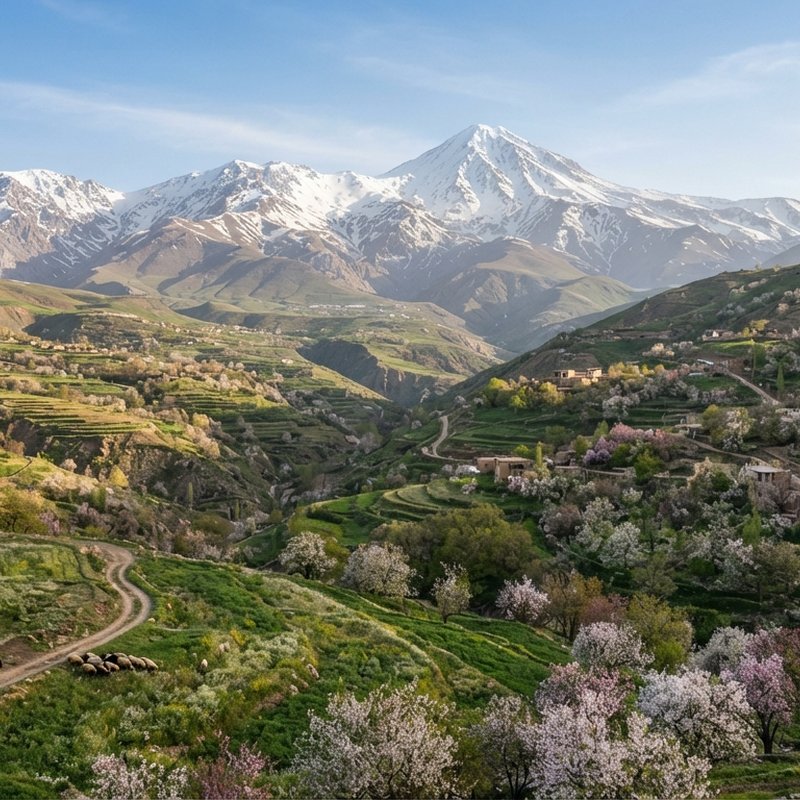
March to May and September to November are the safe answers, and for the centre of the country they are correct: days mild enough to walk, nights cool enough to sleep, and none of the air-conditioning arithmetic that June forces on you. From mid-June the cities on the plateau turn genuinely hot and visits become a matter of timing rather than preference.
Where the rule breaks
The north is a different argument. Along the Caspian the humidity is the limiting factor rather than the heat, so spring and autumn work there too, but the forests show themselves best in autumn. In the northwest around Tabriz the margin is wider still: May, June, September and October are the usable months, and winter is not a mild nuisance but a hard stop, with temperatures that can fall to thirty below.
Winter also flips the logic in the capital. Tehran in the cold months is bright rather than bleak, the slopes above the city are close enough for a day trip, and the Nowruz holiday from late March into early April empties the traffic for about two weeks - which is either the best or the worst week to be in town, depending on whether you need anything to be open.
| Region | Window | What decides it |
|---|---|---|
| Isfahan and the plateau | Mar-May, Sep-Nov | Heat from mid-June |
| Tehran | Spring, or winter with layers | Traffic, Nowruz closure |
| Caspian coast | Spring, autumn | Humidity; forests best in autumn |
| Tabriz and the northwest | May-Jun, Sep-Oct | Winter down to -30C |
| Shiraz and the south | Spring, late autumn | Dry heat from mid-June |
| Yazd and the desert | Spring, autumn | Cold nights, hot days |
| Mashhad in the east | Spring, autumn | Lunar-calendar festivals |
The exception most itineraries miss
Religious festivals in the east follow the lunar calendar and move through the year, and during them the main attraction in Mashhad becomes difficult for visitors to reach at all. That single variable changes a spring trip more than any weather forecast will, and it is the one thing worth checking before you lock the dates.
What I book first
I start with the two or three cities that will decide the trip - usually the plateau and Fars - and check their window first, then let the edges of the route flex around it. If a date falls between the windows, I move the desert and the south rather than the mountains, because a hot afternoon in Yazd costs you a day and a cold night in Tabriz costs you the whole plan.